Thursday, August 20, 2020

The Good Detective (2020) Family

One of the drama's main strengths is the way it portrays different group dynamics. Those among the male leads, the camaraderie of Team 2, Eun-hye's newfound family, the senior officers of West Incheon Police, the women and even the Yoo brothers. This was clearest in the most recent episode which could easily have been entitled "Family".  Even while it purports to be a crime show, the show explores families of varying stripes... both biological as well as those formed through necessity in the fiery crucible of hardship and suffering. 


For passionate truth-seekers it's a lonely world out there. For them it is a moral wilderness particularly if one is swimming against the tide. But for common causes, lonely truth seekers eventually find their way to each other especially if they stand out as a rare breed of individuals. Reluctant partnerships are formed which may lead to friendships which in turn may lead to the development of a substitute families built on trust from surviving one trial after another together. It seems to be the contention of the drama that these  types of families are built in large part by circumstance and shared ideals. Biology is a non-entity.

I've enjoyed the exchanges between Yoon Sang-min and Jin Seo-kyung signalling their collaboration in the last two episodes. I'm not generally a cheerleader for girl power but in desperate times when men and women wrestle with their consciences while coming up against roadblocks over and over again, it is heartening that two people with common goals can find allies where they may. Yoon Sang-min inhabits a solitary existence. In her case collegiality, much less friendship, is a rare find. She finds in Jin Seo-kyung a moral kindred spirit underneath the self-deprecating banter. The two women shake hands, share their goals and discuss luxury handbags. Both claim to buy luxury handbags but can't bear to use them. Once in a while they take theirs out of storage to admire. It's a metaphor for the current case... one of those rare cases that reminds them of why is it that they do what they do. They are realistic enough to know that bringing resolution to the case won't change the world but it is something that will be personally satisfying and may go some way in appeasing troublesome consciences.

Oh Ji-hyuk and his cousin Oh Jang-tae are polar opposites personality wise and are on opposite sides of the law. The latter's a sleazy possibly psychopathic millionaire playboy who's certainly committed murder and capable of much violence. His wealth allows him to indulge without consequences. Although they are biologically related, share the same surname, they have nothing else in common. Then there's still the unsolved mystery of Ji-hyuk's father's death. Is Jang-tae or God forbid, the late uncle involved in that sordid event? There seems to be some implication that it's in-house. A shared environment certainly did not see them both walking the same trajectory or keeping common cause.

Yoo Jeong-seok (editor-in-chief of Jeonghan Daily) and Yoo Jeong-ryeol (Minister of Justice) are two high achieving brothers who enjoy worldly success. with a dark family secret that's only recently come to light. Their relationship with Oh Jang-tae is purely transactional. "You scratch my back and I'll scratch yours." He knows some of their dirty secrets going back to the previous generation and they promise to keep him out of jail. There's no trust and certainly no loyalty in that dynamic. It's purely expedient. However as the police does more digging into the Lee Dae-chul case, whatever complacency that either side were labouring under before is now shaken with new revelations. As far as the brothers are concerned, their loyalty to each other appears steadfast despite the ominous day of reckoning in the horizon that threatens to destroy everything they've worked hard for. What impresses me about them is how far they have been willing to go for each other. 

Eun-hee, sister of Do-chang is turning over into a new leaf. She's finally (thank God) made the decision to quit drinking because of her son, Jae-woong. It's finally sunk in that she can't keep going the way she has if she wants to have a relationship with Jae-woong who is also missing his mother. After his uncle's pep talk, Jae-woong decides to take up judo following his mother's footsteps. She's ecstatic and finds a certain comfort that her son hasn't forgotten her. Eun-hye who now lives with the Kangs, becomes the intermediary between Eun-hee and her son because she has lost custodial rights. The empathy that builds up between them is heartwarming. Later the two women who have become closer gang up on Do-chang as only families know how and he is profoundly moved by this new development. With Eun-hee's acceptance of her, the once orphaned Eun-hye now has a family to call her own.

Team 2 continues to go from strength to strength. In an earlier episode after Ji-hyuk's stabbing and subsequent hospitalization, Do-chang tells them that Ji-hyuk has no family to care for him at that time. But young Dong-wook pipes up and says, "Who says he has no family? We are his family." As proof of this, when Seo-kyung comes to visit Jin-hyuk, Dong-wook having to leave on an errand, is sufficiently attentive to give her instructions on helping him with his ablutions much to the embarrassment of both. When the men goes body hunting in the forest, all that turns up after some digging are fully grown ginseng. Consequently they give up on the body search and start digging for ginseng instead. The scene that has them all sitting in the station ogling over the newspaper headlines is a heartwarming one. They're revelling in a rare moment of success and celebrating a minor victory. Team Leader Woo looks on like a grumpy but wise dad, quickly attempts to clamp down on what could potentially become a case of premature hubris.

The banter between Do-chang and Ji-hyuk could possibly be my most favourite thing in the drama. I am especially partial to the backhanded compliments, sympathy and the wry humour. There's so much affection and respect between the men belying the barbed personal comments and the jibes. As Do-chang gradually hears Ji-hyuk's story and begins to understand where that drive to uncover the truth comes from, their easy, good-natured bickering is imbued with a understated admiration. It's more than a partnership, they've become brothers-in-arms.

Wednesday, August 19, 2020

The Good Detective (2020) Justice

*** Beware of spoilers for Episodes 1-14 ***

What is justice? According to the Merriam-Webster, an online dictionary that I frequently use, justice is "the maintenance or administration of what is just especially by the impartial adjustment of conflicting claims or the assignment of merited rewards or punishments". Cambridge Dictionary says it's "fairness in the way people are dealt with". Macmillan Dictionary states that it is "the treatment of people that is fair and morally right."

So why do I obsess over the defintion? Aside from the fact that I enjoy the process of thinking through these things, it's important to begin a discussion of an abstraction with a common starting point. Clearly the vast majority of us operate under the assumption that "justice", in every sense of the word, is attainable or should be achievable to some degree. What those definitions that I cited share is an assumption that a standard called "fairness" or impartiality exists and if it doesn't, it should be by legal imposition. Furthermore, justice as an ideal is a virtuous and desirable outcome.

I say this because there has been a lot of talk about justice in recent times that has many of us scratching our heads because obviously there are some sharp disagreements over what that looks like. As the word "justice" gets bandied around in contemporary society, it is increasingly becoming a justification for all kinds of behaviour that defy the primacy of the rule of law. The ideal and the goal (justice) has become an end that justifies the means.

While I don't want to get too political or philosophical about it, what we think about justice actually matters. It's certainly vital in understanding how this drama sees itself. This isn't the first drama in which an innocent person conveniently takes the fall for something they didn't do... becomes the scapegoat... or the proverbial sacrificial lamb for an interconnected web of agendas. However, what's fascinating in this drama is that we have a series of competing claims for justice being made. Clashes are bound to occur and it seems that the one that has the most power wins. So justice, it seems to me isn't about the rule of law but the use of power to advance a particular cause. In the words of the vernacular... "might is right". For example it seems to many if not most that Lee Dae-chul being executed is a terrible miscarriage of justice. Aside from the fact that the man himself protests his innocence and emerging evidence seems to be in his favour, there are others who disbelieved his claim. But there are others like Yoo Jeong-seok, editor-in-chief of Jeonghan Daily, who claim their right to justice while apparently denying the right of others (Lee Dae-chul in this instance) to justice.

In recent episodes we find out that many years earlier Yoo Jeong-seok lost his older sister when she committed suicide after being raped and tortured by a crooked cop, Jo Sung-gi. Apparently the offender got off with a slap on the wrist. Five years before when Oh Jang-tae killed the art student, Yoon Ji-sun, Yoo Jeong-seok had tracked down the ex-cop who was impersonating a pastor of a church, served the offender his brand of "justice", using his experience as a crime scene journalist to cover up his misdeed. It is unclear at this point of if he killed Detective Jang Jin-su although that certainly would explain his eagerness to see Lee Dae-chul executed for the crimes of killing both the art student and Jang Jin-su. 


Superintendent Moon believed that Lee Dae-chul was guilty so he tampered with evidence for the art student's death to get the result he thought was warranted. He too made a claim that he was acting on behalf of justice. He fabricated evidence because he thought it was the right thing to do to ensure the guilty party got what he deserved. It was a subjective judgment and he manipulated evidence to fit the narrative that he had settled in his own mind regarding Lee Dae-chul's guilt. He failed to maintain objectivity because a beloved colleague had been killed in the line of duty. He may have had the right intentions of wanting justice for Jang Jin-su but his inability to be dispassionate caused another man to die unjustly. In doing so, he also led others astray and compromised the integrity of the police as a result. When one does the wrong thing, cover-up then becomes the default position because instead of owning up to the misdeed, the tendency is try to get away with what is unlawful as much as possible.

In both instances having power and competing claims of wanting justice turns out to be gravely tragic. Having power can corrupt well-intentioned people quickly. Power may expedite justice on some level but the law of unintended consequences means that things seldom end well when the process is side-stepped. My belief is that if Yoo Jeong-seok was so convinced of his position, why didn't he face the music and give himself up? That's my question to him. Did he not have the courage of his convictions? Or perhaps he believed that just as Oh Seung-gi could get off lightly, he had the power to play the system to his advantage. He must have thought he was justified in doing what he did that he did not consider himself guilty. From my perspective, Yoo Jeong-seok becomes the monster he believed he had slain.

It is true that the judicial system is an imperfect one. This is a broken and fallen world after all. Things fall through the cracks and obviously guilty people get away with murder for a whole range of reasons. Politics being a major factor. But when individuals place themselves above the law to gain justice, however well-intentioned, there are serious ramifications. Worse still innocent bystanders get swept into the net. Yoo Jeong-seok and Superintendent Moon might have thought their causes were righteous but taking matters into their own hands and then denying culpability left a girl orphaned, having to live off the streets on her own. What's worse, as far as the community is concerned, our institutions become compromised. The community is all the poorer for individuals putting themselves above the law. No one should be above the law because this is how the rot starts. Yoo Jeong-seok and Superintendent Moon compromised their respective organizations and the long-term consequences play themselves out.

When Woo Bong-sik said about Moon Sang Beom as he left his the station's premises, "We kicked him out of his house. I don't know what's right or wrong anymore." It is a telling statement. Superintendent. Moon was reaping what he had sown even if he had repented. There would be no reason to kick him out of his position if he had done the right thing all the way through." Perhaps bribery is seen to be a lesser evil. But lesser evil can lead to greater ones. Moon Sang Beom acknowledges it himself. There is no rest for the wicked.

What the show demonstrates though is that even when judicial justice falls down or falls short, natural justice is still act work in the background.

Tuesday, August 18, 2020

Stranger Season 2 (2020) Early Review

The first season introduced us to Hwang Si-mok, the titular character as a dispassionate, dogged prosecutor who was depicted and located as the consummate outsider to the colluding machinations of Big Business, judicial system and government. It was hugely successful from all accounts, gaining critical and popular acclaim at home and overseas. It also managed to pick up a swag of awards for its troubles. So it makes sense that a second season would be given the green light as long as the cast and crew had the will to make it happen.

Sequels are always tricky as we're well aware. Few sequels ever reach the heights of their predecessors not only because of the perpetual burden of expectations but because it is difficult to replicate the freshness of the original.

Judging from the first two episodes, it seems that the writer has wisely decided to take a different approach although the focus remains largely on the criminal justice system. The old gang (aside from any who died or were put behind bars in the previous season) returns with the addition of some new faces but it's two years later and the political landscape has seen some changes. The show lands us right in a middle of a turf war between the cops and the prosecutors bickering over investigative rights and authority in the determination of case closures. Many on both sides are on edge with neither side wanting to give in. It's a cold war conducted in full view of public gaze as each side attempts to weaken the other's credibility. When the political wrangling reaches boiling point, the big guns from each side decide to do what bureaucrats do when giving the impression that something is being done... form a committee made up of members from each side. Hence the Police-Prosecutor Council is born.

Si-mok who was relocated to a regional posting at the end of the first season is inadvertently recalled to Seoul to be part of this new committee. His old supervisor Chief Kang Won Chul doesn't think it's the best idea ever devised by a person because in his mind, Si-mok is a sword that should only be used for very particular purposes or he will end up back in the drawer of oblivion as he did cleaning up corruption two years earlier. Si-mok's response is that he can't stay in the drawer forever and it's clear he's itching to play with the big boys. Chief Kang is well-aware that Si-mok is not someone who can be easily swayed by tribal loyalties and perhaps his being in the Police-Prosecutor Council will do more harm and than good for "their side". 

Meanwhile his former comrade-in-arms, Inspector Han Yeo-jin has been seconded to the Intelligence Bureau within the police organization whose primary brief is policing reforms. Her boss Choi Bit is walking the tightrope of trying to keep promote the organization's interests outside its four walls while protecting the organization from hemorrhaging from within in this battle with the Prosecutor's Office. Yeo-jin has also been tasked to join the Police-Prosecutor Council to protect the organization's interest.

My own feeling is that there are decent but frustrated people on both sides who want to get the job done and hold on to their jobs. But the political wrangling is undoubtedly problematic for a number of reasons. It's a publicity nightmare that can't exactly be inspiring public confidence about the effectiveness of the criminal justice system in the country. Potentially it could compromise the integrity of investigations if both sides play oneupmanship with other people's lives in order to prove something. It can be exploited  by a an ambitious inveterate brown noster like Seo Dong-jae to get ahead in the organization's food chain. Frankly it feels that someone like Si-mok and even Yeo-jin are needed in such a situation. They once proved that the police and prosecution can be on the same side when larger concerns are at stake, so why not now? 

Although still wholly in set-up phase, the second season shows promise. For me the first episode brought in a whole myriad of characters whose importance had to be navigated through for a clear view of the bigger picture. The beach drowning incident although had more to it than first meets the eye became for the two sides a veritable political football. There was no criminal culpability in accordance to the law but the hasty determination was later used by Choi Bit to accuse the prosecution in front of rolling cameras of giving preferential treatment after Si-mok put in a complaint about the unseemly speed in which the final decision was handed down by the prosecution.

It feels to me in these early days that what's really at stake for Si-mok and for the show is the role of prosecutors. All the haggling over authority seem to be about the definition of a prosecutor and what sort of powers they should be entrusted with. Are they investigators? Are they members of the judiciary first and foremost? Is there role in the larger society to exact punishment or to correct? Or are they primarily truth seekers regardless of their tribal affiliations? 

Monday, August 17, 2020

Hospital Playlist (2020) Winter Blossoms

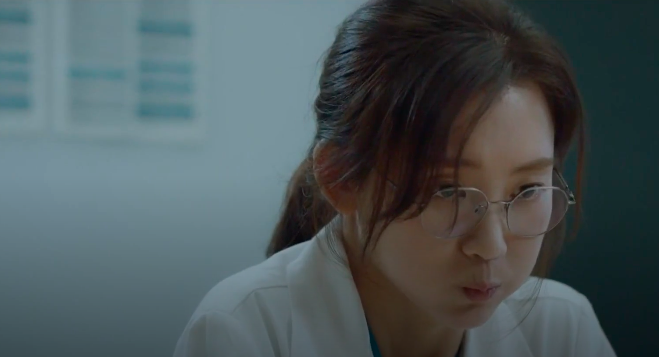
I have often heard it said among my fellow Winter Garden travellers that the quality they most appreciate about Jang Gyeo-ul is the fact that she's relatable. In other words, she's someone they can easily identify with because she makes mistakes and is on a journey of self-development. It's a perspective that I share. Seemingly flawless characters have their place but like Superman without kryptonite, they're predictably going to save the day without breaking out in a sweat. Of course we need them too but us mere mortals identify most with those who plod along like the rest of us. Their journey on some level mirrors ours. Furthermore, a character like Jang Gyeo-ul is needed in a show like Hospital Playlist to ground it. Hospitals (especially drama hospitals) function as life saving stations and those at the top of their game apparently have god-like powers to mediate life and death. And if we forget, the residents are also there to remind us that doctors never stop being lifelong learners.


Our first encounter with Dr Winter aka Jang Gyeo-ul is also Ik-jun's first encounter with her outside the OR. She's notably efficient but her highlighted flaw seems to be her lack of empathy for caregivers and guardians who are desperate for good news. Jeong-won's... Mr Empathy on steroids... initial impression of her is rather negative. It's a mild clash considering their personalities and levels of experience. Then he does his brief but understated impersonation of Mr Darcy when he says, "She doesn't suit me." (Or "She's not my cup of tea") When he overhears her giving a patient's caregiver the bad news, he is quick to whip out his professorial hat and chastise her... in essence for her lack of empathy and irresponsible way of speaking to patients. He demands that she own her words. The vast majority of us would agree with him on that. Gyeo-ul could do better in how she interacts with others. She's a straight shooter that needs a filter. It's a learning event signalling the start of not only her growth arc in the course of those featured months but their slowburn romance. For me it also begs the question as to why no one else had pulled her up on her bedside manner prior to this. After all, she's a third year resident. Something was sorely lacking in her education. Much can be said about this including the favouritism she enjoyed but I suspect that on a metaphysical level the show insists that they were destined to notice each other early on. The "noticing" being the key thing here. But also it's the bumpy start to their relationship that will go beyond work. Later in a flashback we note that she had already noticed him from Day 1 but for him something else had to happen for him to notice her.

In an interesting case of role reversal from the usual Kdrama male and female stereotypes, Gyeo-ul is introduced as the less empathetic of the two of them. In a real enough way she is a character designed exclusively to complement his. It bears repeating that they replicate the Yin-Yang dynamic to a T. Whether one likes it or not, her arc was intertwined with his from the first day she set eyes on him. For her it was love at first sight, for him it was in all likelihood, love at first maggot. At the start she shyly pushes forward to get closer to him but later she pulls away when she wrongly believes her cause to be a lost one. He-who-wants-to-be-a-priest, on the other hand, pushes her away with uncharacteristic coldness. Yet he feels the irresistible pull. Little by little he moves towards her. Until he finally succumbs. The seemingly cold, emotionless third year GS surgeon gradually thaws under the tutelage of the professor who falls for her. His affection for her overrides his own misgivings while inadvertently doing its magic in taking her forward as a clinician. Even when they're not sure about each other, the impact seeps through the masks. It is inescapable. 


Gyeo-ul's sense of efficiency is highlighted when she shows up at the ER to deal with the homeless man squirming around with the frost bitten leg. In an uncalculated act of respect for the patient, she gets the job done when others stand around repulsed by the sight. With no ulterior motive she does what Jeong-won accused her of being incapable of doing on an earlier... dignifying the homeless man by treating him like any other patient with no expression of discomfort. This scene completely reframes our understanding of her. Her underdeveloped communication skills don't come from a place malice but a place of lack. Whatever her faults might be, she comes from a place of sincerity and diligence. So when Ik-jun says she seems to work hard and when Jeong-won dismisses it at first, the show repudiates his hasty judgment of her unequivocally. So what Gyeo-ul needed was someone... or in her case... two people to give her a chance to better herself and give her the right kind of push in the right direction.

Her relationships with Ik-jun and Min-ha brings out another side to her. With Ik-jun, she's his little sister. He's her confidante not only because he is Mr Nosy Parker but because he genuinely cares. With him she was freer to be more animated. With Min-ha, Gyeo-ul shows an unexpectedly wry sense of humour. She gently pokes fun at her best friend's preoccupation with looks and Min-ha takes it all with good-natured indignance. As she interacts with them in the first season, we see her not just as a resident but someone who could easily be our next-door neighbour or a relative even albeit an introverted one.

I often wondered why we seldom got to see her in the OR very much as someone who is a General Surgery resident. The only GS resident who was very much in demand. In fact, from our perspective she seemed to spend more time in the ER or the PICU. A lot of obviously has to do with her dynamic with Jeong-won which the show made the decision to focus on. She also served as a contrast to Do Jae-hak and vice versa. He was apparently better one-on-one with patients while she was in all likelihood a much stronger surgeon. As Jeong-won gravitates closer to her towards the end of the calendar year, her presence in the OR increases. Before that we are given glimpses of her progressively becoming a more well-rounded clinician. The show spotlights an occasion in the PICU where she interacts with the mother of a patient. Jeong-won is present at the time and overhears the exchange. Once again the deficiencies in her communication skills are brought to the forefront. However, rather than pulling her aside and chiding her, Jeong-won takes responsibility for the situation and explains things in simpler, layman's terms. This provides Gyeo-ul with a model to work from. The mother whose anxiety distracts from paying full attention later returns and seeks further clarification. Gyeo-ul, rather than parroting what Jeong-won had done, took it on board but made the effort of simplifying things further with quick diagrams. She is rewarded here with an effusive hug from the anxious guardian whose relief is palpable. For Gyeo-ul, in Episode 9, this is a moment where she makes a leap in her clinical skills and experiences first hand the joy of getting it right. Her teachability and lack of resentment is my favourite things about her. Even when corrected, she takes it all in her stride and makes effort to improve. As I said elsewhere, she's not one to hold grudges. It didn't prejudice her against Jeong-won. She proved herself willing to learn and proved that she could thrive under the right kind of guidance.

One of the things that impresses me about this show is the way Gyeo-ul's looks are downplayed. She's proud of her own frugality in the manner of dress. Her hair is completely dishevelled after chasing down the DV dad. Her entire face swells up when she has her anaphylactic episode. Later when she's recovering in the ER, she looks the part. On top of that she keeps her glasses on most days. And as my online friends have noted, there's no big makeover before the big confession. So as far as looks are  concerned, she's not exactly a standout. But she is widely beloved and valued regardless of how she looks.

For a so-called side character, her popularity seems disproportional. From what I've seen around the web, her pairing with Jeong-won resonates with so many because of her. She's easy to root for and many of us champion their cause because we champion hers. She's one of us. He is the man that brings that rare smile to her face. More importantly, he is good for her as she is good for him. Our Dr Winter blossomed beautifully in a garden cultivated especially for her.

Friday, August 14, 2020

Hospital Playlist (2020) Shin Hyun Bin's Audition Clips

When I wrote my last post about the WG dynamic a couple of days ago, I had no idea that the showrunners of Hospital Playlist would be releasing clips of Shin Hyun Bin's auditions the next night. Because there has been so much uncertainty in Soompi lately, I had decided to rewrite a few posts that we'd lost when the "Clubs" feature got lost in the internet black hole. That was one I had been itching to rewrite and finally had the time to do it.


I found the audition clips helpful in that they confirmed what the vast majority of us had already suspected... that the WG love line was established very early on. Both Shin Hyun Bin and Yoo Yeon Seok knew that it was on the cards before they had even met each other. They were given that piece of information right at the start presumably because they wanted the actors to prepare their respective roles with that in mind. From the way Shin-Lee described the character, I concluded that SHB nailed the character perfectly. She was able to capture all the facets and nuances of Jang Gyeo-ul. It was delightful too that her artistic abilities came in handy as she studiously prepared for her part in Episode 9. The other half was also impressed  at how they transformed the very attractive SHB into someone that might be considered "plain". The fact that they took the trouble and told SHB that they wanted to downplay her looks was very telling. The emphasis on her ordinariness validates my thinking on the subject.

It was noteworthy that they wanted to tell the story of the WG romance largely from the perspective of Gyeo-ul to emphasize aspects of her personality -- her straightforwardness and her innocence. That was something I had highlighted myself in the past. I was also chuffed to hear the PD say that the romance wasn't meant to be dramatic... or in my words... the main thing. I always understood that he wanted to keep the hospital coming and goings the main thing and in that context there would be some romance. According to him, the progression was always going to be slow because it is slated to be a multi-season drama. As far as I'm concerned, it validated my point that the WG dynamic is not a seat-warmer or stepping stone for Jeong-won and some other female.

Despite all that, it came to my attention that there are still some who doubt the long-term viability of the WG couple. The timing of my last post on the WG couple on hindsight was rather interesting. I don't need to rehash what I've already written except to say that the showrunners have spoken and they have given their characters a great deal of thought, not leaving any room for doubt. The fact that they asked SHB if she knew this was a multi-season show is suggestive. Sure, there are vested interests who think that there is wiggle room to postulate more theories because in their particular schema, they have no room for someone like Gyeo-ul to ever turn the head of someone like Jeong-won, as if he's a paragon of perfection and she is the chief of sinners.

Wednesday, August 12, 2020

Hospital Playlist (2020) The Life and Loves of Chae Song-hwa

Yesterday after posting my article on the WG dynamic, I was asked whether I thought Song-hwa would end up with Ik-jun or Chi-hong. It's a question I've been asked about and debated before so I thought it might be good to address it at some length here.


To put some background to this and lay all my cards on the table, it seemed to me quite early on... by Episode 4 to be exact, that the drama was indicating in no uncertain terms that Chi-hong had romantic feelings for Song-hwa particularly as he was the only one that showed up at the camping ground. To be honest I was amenable to the idea of a male subordinate being in a relationship with his workplace supervisor especially because Chi-hong was/is an immensely likeable human being who was/is mature and down-to-earth. There's a relatable authenticity about him that I gravitate to. I, like a lot of others thought he was great husband material from everything we saw. Personally I wanted this one to happen... probably even more than Winter Garden because I thought it would be really groundbreaking in some way if it did. The power dynamics would be fascinating to explore. Plus... I adored Chi-hong (still do) and wanted him to have his happily-ever-after. I was frankly annoyed with what the show did with him... and made him an enemy of many viewers for "crossing the line" in Episodes 10- 11. I was uneasy about that although he wouldn't be the first male in a Korean drama that did it and I understood it as an expression of the military man in him: All's fair in love and war etc etc. What I resented about that whole incident was how the drama seemed to be using Chi-hong to spur Ik-jun on to make his confession... truth be told.

I can see why people love their Ik-Song. Jo Jung-suk always has great chemistry with his co-stars and many perceive him to be the male lead. Some people have a thing for musicians. :D I enjoy Ik-jun -- the good, the nutty and the friendly. I'm certainly very neutral about the whole thing so I'm not necessarily in the front row cheerleading for them to be a couple. But I'm a canon sort of person 9.5 times out of 10.

The reason why I remain neutral and I certainly won't be putting all my eggs into that basket is because of Song-hwa herself. All of this rests on how she perceives the men and her relationship to them. I've heard it said that she's a hard one to read but I personally don't think so. Her role in this first season is very specific... as I've said in my episode retrospectives. She sees herself as the Sage. That's absolutely clear when Jae-hak walks into her office and she rejects IJ's overtures to tempt her with food. It's obvious where her priorities were then. The thought of being confessed to by two men close to her... one a student, the other a very old friend... is deeply unsettling. I think there are good reasons for that. She resists a change in dynamics with them because she values what they already have. That's why she tends to date outside her immediate circle of relationships. Why would she want to disrupt the status quo for an uncertain romantic outcome and lose everything as a result? 

Now that the entire first season has aired, I am very doubtful that Song-hwa will change her mind about Chi-hong. It seems like the show has burnt that bridge sadly. With Ik-jun, I frankly don't know. There are two more seasons to go so and since Ik-jun's one of the Flawed Five and very keen, he may have another shot at this. Plus he has secret weapon U-ju.

The possibilities as far as I'm concerned are as follows:

1) Song-hwa could end up being a contented single 40-year-old career woman even after 3 seasons. It would be groundbreaking to say the least. For a Korean drama that is. It would certainly, as I've said to online friends, overturn a familiar trope that a "lead" female character "has to" ride off into the sunset with one of the male leads. It would also put to rest once and for all the argument that Writer Lee U-jung only knows how to write Reply type stories.

2) Song-hwa ending with Ik-jun is definitely a contender because of the foundations that the show has already laid. Once upon a time these two people liked each other but they moved on. One of them even got married to someone else and had a child from that relationship. However, for them to pair up as I've said on other occasions, she will want to be sure that all the other men have their happily-ever-after. I say this because I'm sure that both Song-hwa and Ik-jun moved on in consideration for their friendship with the other guys. This is a friendship that has lasted 20 years surviving all kinds of tumult so it stands to reason that she's chosen to prioritize it. She won't want to shake things up until she's sure that there won't be a falling out among the Five because of this.

3) Song-hwa could end up with someone else we haven't met as yet. Someone from church maybe. This is the least likely scenario but I'm throwing it out there for public consumption. Again, it would be out-of-the-box thinking on the part of the show for her to be dating or married to some nobody guy outside of the hospital context at the end of season 3.

4) We could all be wrong and Song-hwa might change her mind down the track about Chi-hong but I'm not optimistic because of how Episode 12 ended for them. Still, she's not going to be in Sokcho forever, I imagine.

As I've said, everything hinges on what happens with her next season. Except for some random unreliable doctor from outside the hospital, romance wasn't really on the agenda for her in season 1. She was everybody's adviser, teacher or confidant. That's an amazing thing that the show did to be honest. And to give the most significant romance arcs to so-called side characters can be said to be almost innovative by Kdrama standards.

Tuesday, August 11, 2020

Hospital Playlist (2020) The Epistemology of WinterGarden

I imagine that everyone who is reading this knows that for one reason or another I became some kind of online defender of the WinterGarden pairing. No one is more surprised about that than I am. It was never my intention to promote a fictional romance for its own sake and go to battle for it. It was ludicrous then as it is ludicrous now. Although I am thankful that people enjoyed what I had to say and I don't take that for granted, the reason why I jumped into the fray was because I believed at the time that the show was being misinterpreted and sending open-minded viewers into confusion, rage and angst. It's true that people are entitled to their opinions... I don't begrudge them that (it's a tv show after all) but they're not entitled to twist the facts to suit their own purposes. Or at the very least, they shouldn't get a free pass for doing so. 

These days I've become very fond of the WG dynamic. I liked Gyeo-ul first and then I gradually became fond of Jeong-won. Even in Episode 3 I could see what the showrunners were doing but I didn't get onboard from the start because I don't watch medical dramas for romance. At around Episode 5 I became convinced that the show was serious about developing a connection between them so I climbed into the bandwagon prepared for the fact that this was going to be the stuff of slowburn. An aspirant to the priesthood being paired up with a shy unassuming 3rd year GS resident... it wasn't going to be love at first sight. (Love at first maggot maybe) But the show seemed to be tying their dynamic to the question of whether Jeong-won was staying or leaving. Time and time again, there were voices saying that it was a one-sided crush. This is how it went... Jeong-won is Mr Nice Guy and he's lovely to everyone. He's not romantically interested in Gyeo-ul blah blah blah. You know the drill. Of course I kept an open mind but over time, the charge that it was a one-sided crush became less and less convincing. Especially when the camera continued to firstly, focus on Jeong-won's reactions to Gyeo-ul's doings and then frames them together in shots as they interact in the ER, the PICU and of course the OR. Why do that... if she's just a "side" character with a cute "one-sided crush"? It made no sense to me unless I am supposed to conclude that Ahn Jeong-won notices or interacts Jang Gyeo-ul in a way that is outside the norm. 

In Episode 4, when they're both waiting for the lift to arrive, why focus on a back shot of the two of them? Why is the Mr Nice Guy Ahn Jeong-won being awkward and doesn't initiate the hello? Why can't he have a normal conversation with her like he does with other women in the hospital if he's really as nice as we're told? Then during the OBGYN-Pediatrics conference, he glances at her devouring chocolate cakes. Later as he gets up in readiness to leave, he pushes two packets of her favourite cakes across the table to her. The point being that he only does it for her. Not for anyone else. If he is such a nice guy like everyone insists that he is, why doesn't he distribute the rest of the confectionery to everyone present the way she did at the start of the conference?


In another episode, Hui-su, a familiar presence in the ER tells Bae Jin-hui that Jeong-won agreeably goes out with women at work whenever asked so she's nothing special to him. This gives Gyeo-ul, who overhears this exchange, food for thought and she seeks him out. However, when Gyeo-ul puts the question of dinner to Jeong-won, he turns her down quickly citing a visit to mother on the weekend as his excuse. Why does the show do this? To tell us that Jang Gyeo-ul is nothing special to him? That he finds her abhorrent? So why lie about his weekend? If he apparently goes out with female staff routinely, why doesn't he do it in this instance? He's clearly breaking the pattern of the norm for some reason. This instantly made me suspicious. What's even more compelling is that the show goes to the trouble of setting up both scenes as obvious contrasts. 

From Episodes 2 to 12, there are repeated instances where we are asked to look at Jeong-won's behaviour towards Gyeo-ul as a series of exceptions. In his mind, she is an exception and stands out among all the women. Even if a viewer doesn't particularly like Gyeo--ul or Jeong-won, it can't be denied that the show puts them together in such an obviously consistent way that no one can say that the resolution to their slow burn romance came as a surprise. And if anyone wasn't that convinced, the show brought in the scrub nurse and Rosa to tell us unequivocally that Gyeo-ul is special to Jeong-won and that he treats her differently.

These are the facts. The show gives us plenty of them. Sure, it's possible to say that the way the romance was constructed and developed was not to your liking. I can appreciate that opinion. People have unmet expectations of what a romance looks like. People don't all like the same things. But that doesn't change the facts that were put in place over time to highlight that these two people had a particular dynamic that was exclusive to them. 

To deny that is to deny the story that the show is telling. That's the part I find baffling. In all my years of watching dramas I've never come across such a systematic reinterpretation of a drama that's not a fanfic or parody by disregarding facts or dismissing them because of egregious bias. I have my own criticisms of the show... particularly regarding what they did with Chi-hong towards the end but I'm not going to insist that despite all that's said and done, Song-hwa is secretly in love with him because she doesn't know her heart just because it's my preference. Song-hwa has spoken loudly and clearly. I take it at face value. Moreover it's consistent with the rest of her behaviour in the show even with Ik-jun. There is an objective reality that exists in the drama where the characters do and say things. If we can't trust any of that because it doesn't mesh with our prejudices then what can we trust? The quality of evidence for one's position has to be there. 

It's obvious that our battle was in large part to do with deep prejudice against Gyeo-ul and possibly certain unmet expectations. Expectations that Song-hwa, the female lead has to be at the centre of a reverse harem or a love triangle. The men have to be fighting over Song-hwa... apparently... it's a given because we're drama watching bots and because Kdrama writers have no creativity. The irony of course is that Song-hwa by the end of the first season is happily single after not being all that happy to be confessed to, not once, not twice but at least four times. Moreover, why would a 40 year old woman be in a middle of a love tussle with men she's known for years? It doesn't make sense. Jeong-won least of all because he'd signed up for the idea of religious celibacy for years. As I've argued, the show is unerringly logical and the people behind it have a profound understanding of human behaviour. People don't change easily. When they do it's because of upheavals in their lives. So for Jeong-won to not go to the priesthood, it has to be something very very different. Exceptional even.

Gyeo-ul was the show's choice for Jeong-won for many good reasons. I've outlined many of those in my episode retrospectives. But most importantly she is meant to be a balance to his over empathetic nature. His calling was always medicine. He got it right the first time but the emotional baggage that came with the job eventually took a toll on him. We are told that pediatric surgeons are a scarce breed of doctors. Jeong-won works on his own. Gyeo-ul was the only GS resident. So it makes sense that he would eventually gravitate towards her because they would be thrown together daily in a professional capacity. The reason why the camera lingers on him while she's picking off maggots is because it is a record of a significant paradigm shift for him. Why do it otherwise? It was supposed to be her moment and yet it became his moment too because he was forced to change his mind... and think more favourably of her. Whatever his reasons for being there in the ER, his being there changed him, her and eventually them. 

If for instance, Jeong-won is meant for someone else, why would the show go to all the trouble of setting up all these moments and confirmations? The question that I have for those who say that the Winter Garden is a mere flash in the pan is this: What is the evidence for that? Why are the facts that were given to us insufficient? Because the conclusion of the first season validates what most of us understood the show to be doing. That means that we followed the evidence accurately and came to the right conclusion ahead of time. This isn't just a mere matter of being happily delusional which is the delight of fanfiction writers everywhere. This is about claiming a kind of authority... about who has the right to speak and say what's what. If someone can look at the confession at Episode 12 and say that it's just somebody's dream, why can't I say that the whole show is somebody's dream? Why don't we take it to its logical conclusion? At what point is the show real and at what point is it a dream? Who gets to decide that? 

There's an easy answer to that of course.

I'm fine with non-canonical pairings. I have been known to enjoy well-written fanfics of non-canonical pairings. But I hope I know the difference. In a way the battle wasn't about Jeong-won and Gyeo-ul but about who had the right to tell us how to think about the show.

To insist vociferously even now that Jeong-won and Gyeo-ul are not the endgame isn't just a preference issue. It's, I think, missing the point. There are reasons why Jeong-won didn't fall for Song-hwa, Bae Jin-hui and all the other women who have been a part of his life journey. All of that feed into who he is as a man and the overall messaging of the show. People make plans. Life is unpredictable. Unpredictable things happen. People change their minds. To me that's the big story of Hospital Playlist. Furthermore let's take a look at Gyeo-ul. She's not exactly strikingly beautiful or charismatic. Not your typical lead Kdrama lead female. I imagine that's the objection from some quarters. But that's exactly the reason why Jeong-won fell for her. It wasn't for her looks first and foremost because he was surrounded by beautiful women his entire life. He saw another side to Jang Gyeo-ul during the maggot scene. That beautiful, gracious act made her beautiful to him. There's a well-known verse from the Old Testament in the Bible that relates to this:

The LORD doesn’t see things the way you see them. People judge by outward appearance, but the LORD looks at the heart.” (1 Samuel 16:7 NLT)

As far as I'm concerned, everything in Hospital Playlist happens for a reason. It's a show that does things very deliberately. The moral universe is one that has a place for all kinds of people including Jang Gyeo-ul. Do we dare say only outwardly attractive people deserve to be loved? Don't we agree that this show pays Ahn Jeong-won the highest compliment... by insisting that he is a man of great substance because he can do better than judge a woman by her appearance?